



AI in outbound: keeping speed, judgement and brand control
A practical approach to using AI for outreach while keeping claims, permissions and commercial decisions under control.
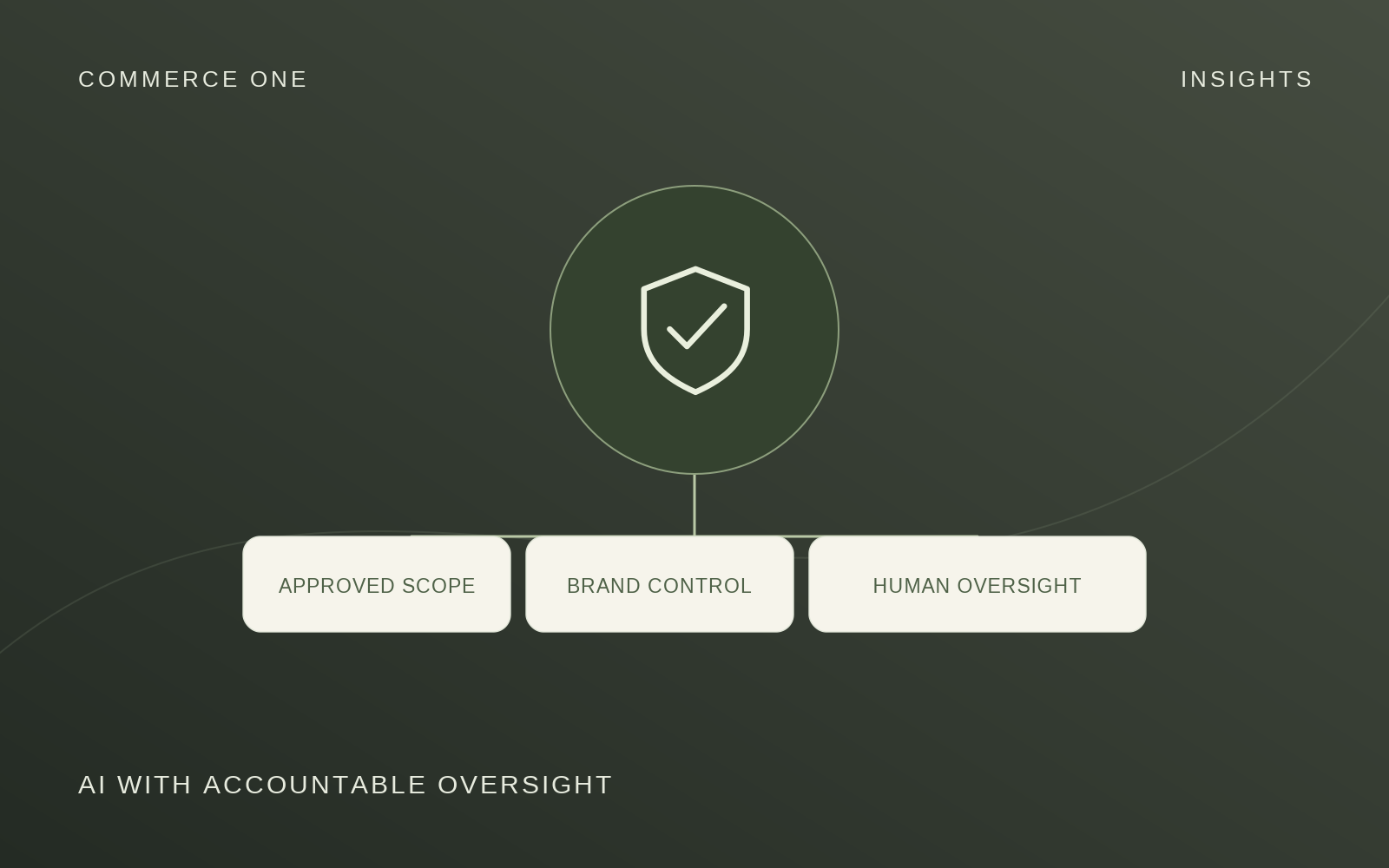
AI can help a small team organise research, prepare relevant messages and keep routine conversations moving. Its usefulness depends on the quality of the information and authority behind it.
A system that can produce an answer quickly still needs to know which facts are approved, what it may promise and when someone else must make the decision. Those boundaries are part of the commercial service.
Begin with approved knowledge
An outbound Program needs a reliable account of the offering: what it does, who it suits, geographic availability, practical limitations and the next steps the business can support.
Approved case studies, product specifications and answers to common questions give the system material it can use. Commercially important information should have a clear owner and a review process. A draft price, expired promotion or superseded specification should not become a customer promise.
The same principle applies to prospect research. An observed fact can support a message. An assumption about a buyer’s priorities should remain an assumption.
Give routine work clear boundaries
Within an agreed process, AI can assist with:
- Summarising company research and identifying missing information.
- Drafting messages from an approved proposition.
- Classifying incoming replies and extracting questions.
- Answering routine questions from approved material.
- Preparing a concise handover for the appropriate person.
The level of automation can differ across these tasks. Draft preparation may be reviewed initially, while a well-defined routine answer may later be sent automatically after the workflow has been tested.
This allows a small team to focus its attention where judgement matters, without requiring manual intervention in every routine step.
Keep material decisions with the right person
A request for a discount, a technical guarantee, a contractual change or a confidential document needs an appropriate decision-maker. The system should recognise the boundary and explain the next step.
For example, a prospect might ask whether a supplier can meet an unusual specification within a particular deadline. A useful response captures the requirement and routes it for confirmation. It does not turn a general capability statement into a promise to deliver.
An unanswered question is visible work to resolve. Inventing an answer conceals the uncertainty and creates a commercial risk.
Make brand control operational
Agree the sending identity, the permitted claims, the audience and the rules for follow-up before activation. Messages should make the commercial relationship clear and represent the business accurately.
Confidential information needs equally clear boundaries: what may be used internally, what can be disclosed and who may authorise exceptions. A shared service platform should not become a reason to reuse one client’s private information in another client’s campaign.
Email delivery also requires ongoing care. Yahoo’s sender guidance addresses authentication, unsubscribe handling, complaints and sending practices. Technical setup supports responsible operation; it does not establish permission to contact someone or guarantee an inbox placement.
Expand after reviewing the evidence
Before increasing coverage, review a sample of outgoing messages and completed conversations. Check factual accuracy, relevance, escalation decisions and whether the receiving team can handle the handovers.
A wrong audience or inaccurate claim should lead to correction. Complaints and requests to stop should influence activity. Adding volume to an unresolved problem makes that problem larger.
Commerce One’s Outbound approach combines research and automation with agreed commercial boundaries and accountable oversight. The client’s knowledge, permissions and decisions remain central to how the Program operates.