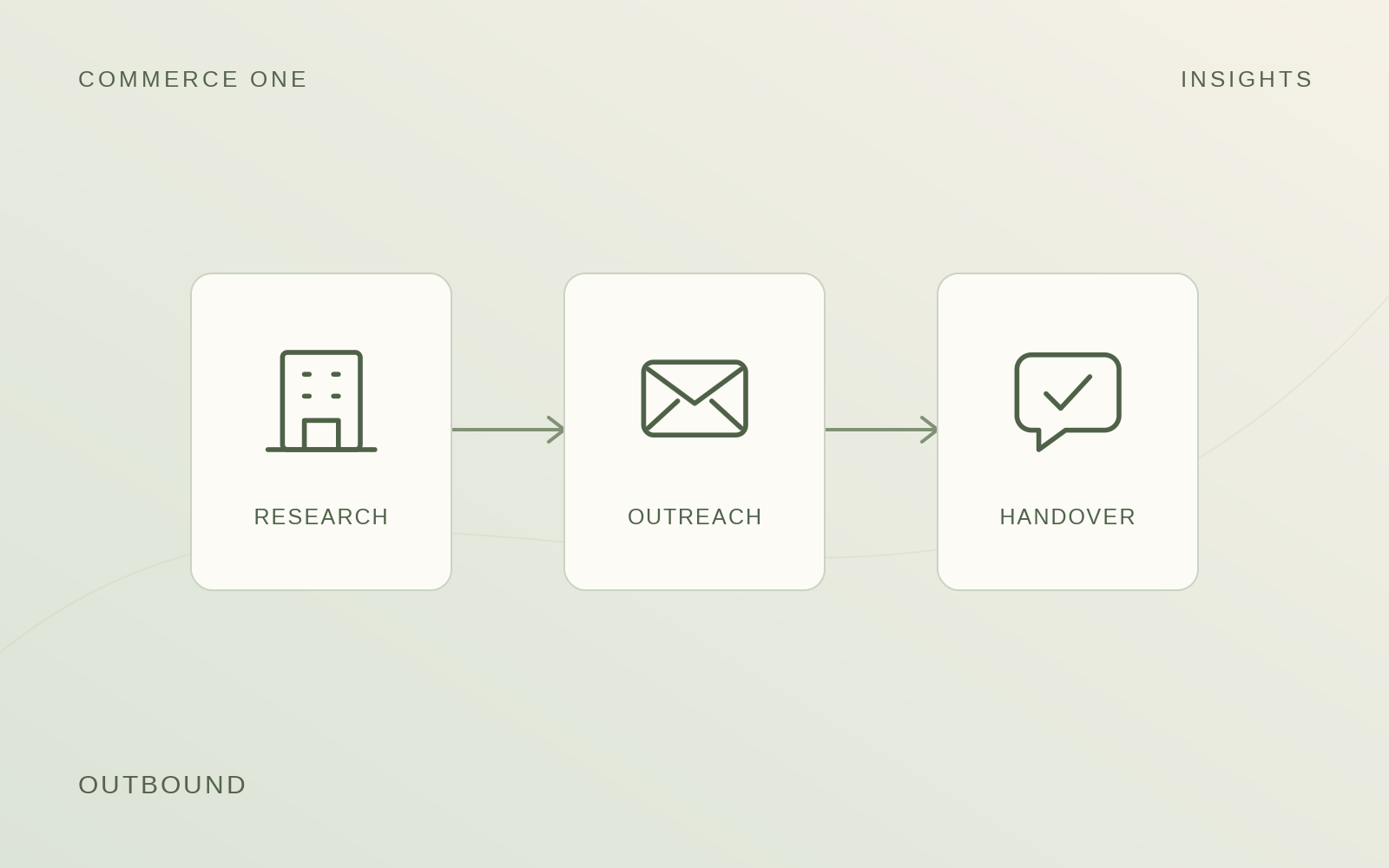



Research before outreach: building a market worth contacting
Good research explains why a company belongs in the audience, which person matters and what remains unconfirmed.
A company name and an email address tell you where a message might go. They say much less about whether the company is a sensible prospect.
Useful outbound research establishes a commercial reason for inclusion. It connects something the business actually does with something your offering can help it achieve. That reasoning should remain understandable when another person reviews the record.
The starting point is a clear definition of the market.
Define the audience through buying conditions
Industry, location and company size can narrow a search. The strongest criteria also reflect what must be true for a business to buy.
For a packaging supplier, relevant conditions might include the product category, packing format, order size, delivery geography and whether the business manufactures or distributes. For an equipment supplier, the relevant factors might include production process, application and service requirements.
These conditions prevent a broad industry label from becoming the whole qualification process. Two businesses in the same sector may have very different purchasing needs.
Write down the exclusions at the same time. A prospect may look attractive but fall outside the delivery area or require a capability you do not offer.
Separate evidence from inference
Consider an illustrative packaging manufacturer researching food producers.
A company’s website shows a packaged product range and identifies its manufacturing locations. Those are useful observations. The researcher may reasonably infer that packaging procurement is relevant to its operations.
The evidence does not establish that the company is unhappy with its supplier, reviewing contracts or ready to change. Those points remain unknown until further evidence or a conversation supports them.
A good research record preserves that distinction:
| Record | What it captures |
|---|---|
| Observed fact | The relevant activity, product, location or announcement |
| Source and date | Where the information came from and when it was checked |
| Commercial connection | Why the offering may be relevant |
| Uncertainty | What has not been established |
| Contact role | Why this person’s responsibility fits the conversation |
This makes personalisation more credible. The message can refer to an observed fact without inventing a problem.
Treat signals as reasons to investigate
A new facility, distribution agreement or product launch can suggest a useful time to review an account. It does not automatically establish buying intent.
The next question is what that development changes. Does the new facility create a different supply requirement? Does the product launch use materials you can provide? Is the relevant decision made locally or centrally?
Signals become commercially useful when they help answer those questions. A label such as “high intent” should not replace the underlying evidence.
Find the person who can help establish fit
The most senior person is not always the best starting point.
A technical lead may assess suitability, procurement may run supplier selection, and an owner may approve the commercial decision. Research should identify the most appropriate initial conversation while leaving room for referrals.
Contact information also needs a separate assessment. Commercial relevance alone does not establish permission to send marketing. Requirements must be checked for the applicable market and proposed activity.
Use the research in the conversation
The opening message should make the reason for contact easy to understand. A relevant observation, a concise explanation of the offering and a proportionate next step are usually enough to begin a discussion.
At Commerce One, the approved audience brief guides the research and messaging. Replies then provide new information: a different decision-maker, a missing requirement or a market that deserves closer attention.
Research continues as the Program learns. The useful output is a clearer view of the market and the conversations worth pursuing.