


What is Outbound, and when does it make sense?
A practical guide to researched outreach, initial qualification and the point at which your team takes over.
A business can have a credible offering and room to grow while its sales team spends most of its time serving existing customers. New-business research happens when there is a gap in the diary. Follow-ups depend on who remembers. Promising markets remain largely unexplored.
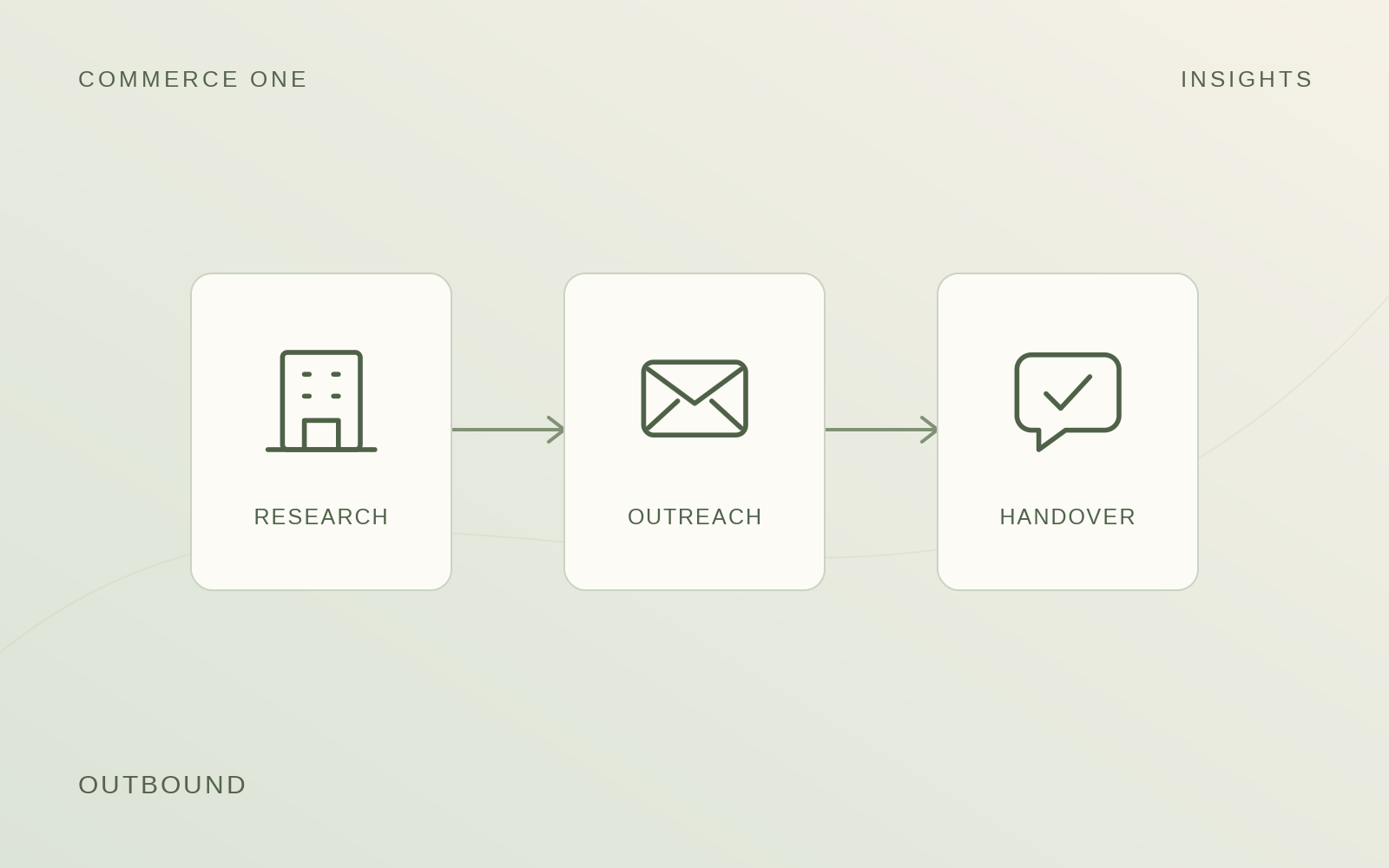
Outbound gives that work a defined owner and a repeatable process. It combines prospect research, contact identification, personalised outreach, follow-up and initial qualification. The purpose is to create relevant commercial conversations that the business can take forward.
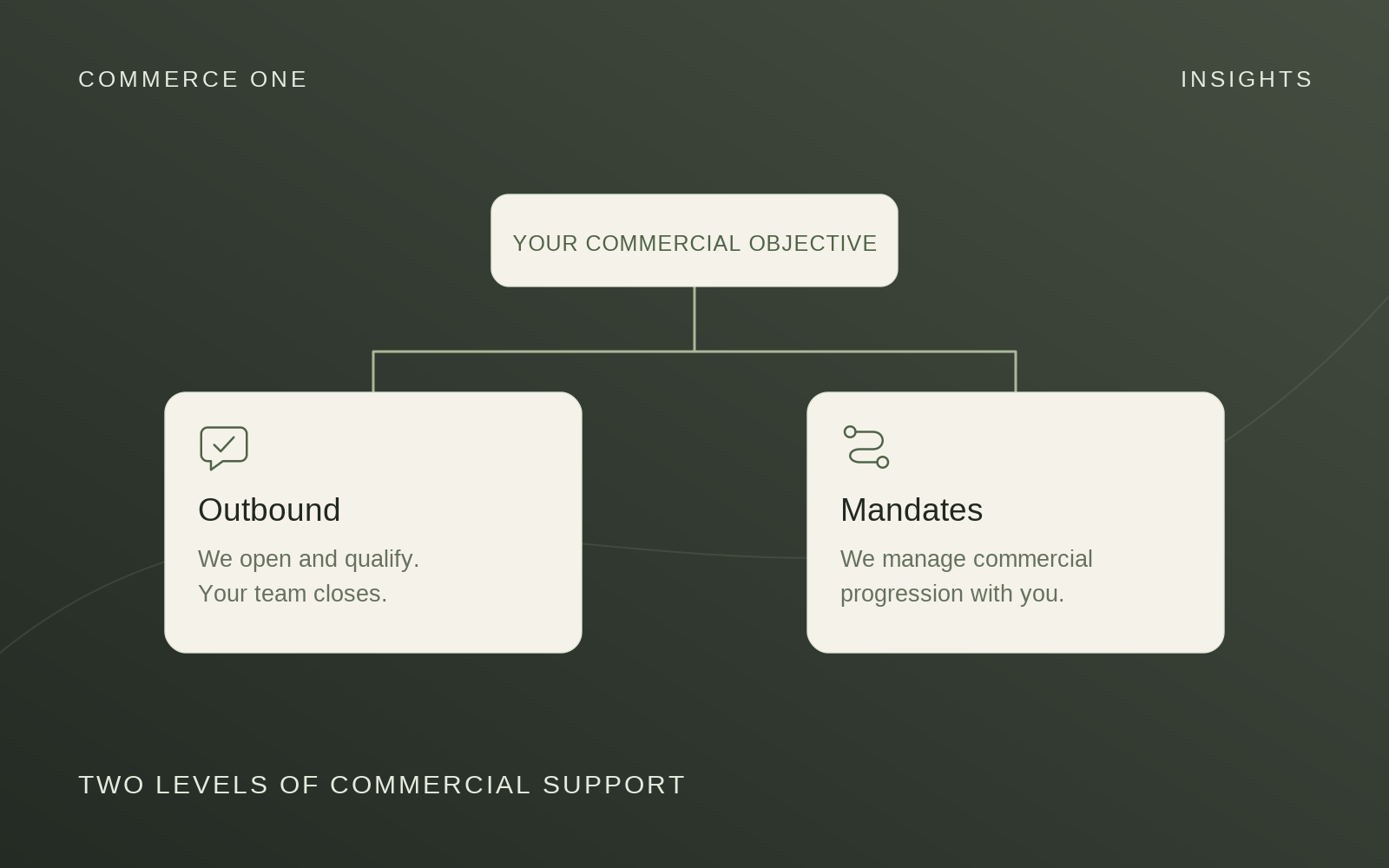
At Commerce One, the division of responsibility is clear: we manage the agreed outbound Program and introduce interested prospects to your team. Your team assesses the opportunity, agrees commercial terms and closes.
Start with the commercial proposition
The first question is what a prospective customer could reasonably buy from you.
“Grow our business” is an ambition. “Introduce our contract packaging capability to food manufacturers with recurring production requirements” is a proposition that can guide research.
A useful brief explains the offering, relevant customers, geographic scope, practical constraints and the next step you can support. That next step might be a discovery conversation, a technical review, a demonstration or a request for a quotation. It should reflect how your customers actually make decisions.
The brief also identifies who should be excluded: existing customers, active opportunities, unsuitable sectors and contacts who must not receive outreach.
What the service involves
A managed Program connects several pieces of work.
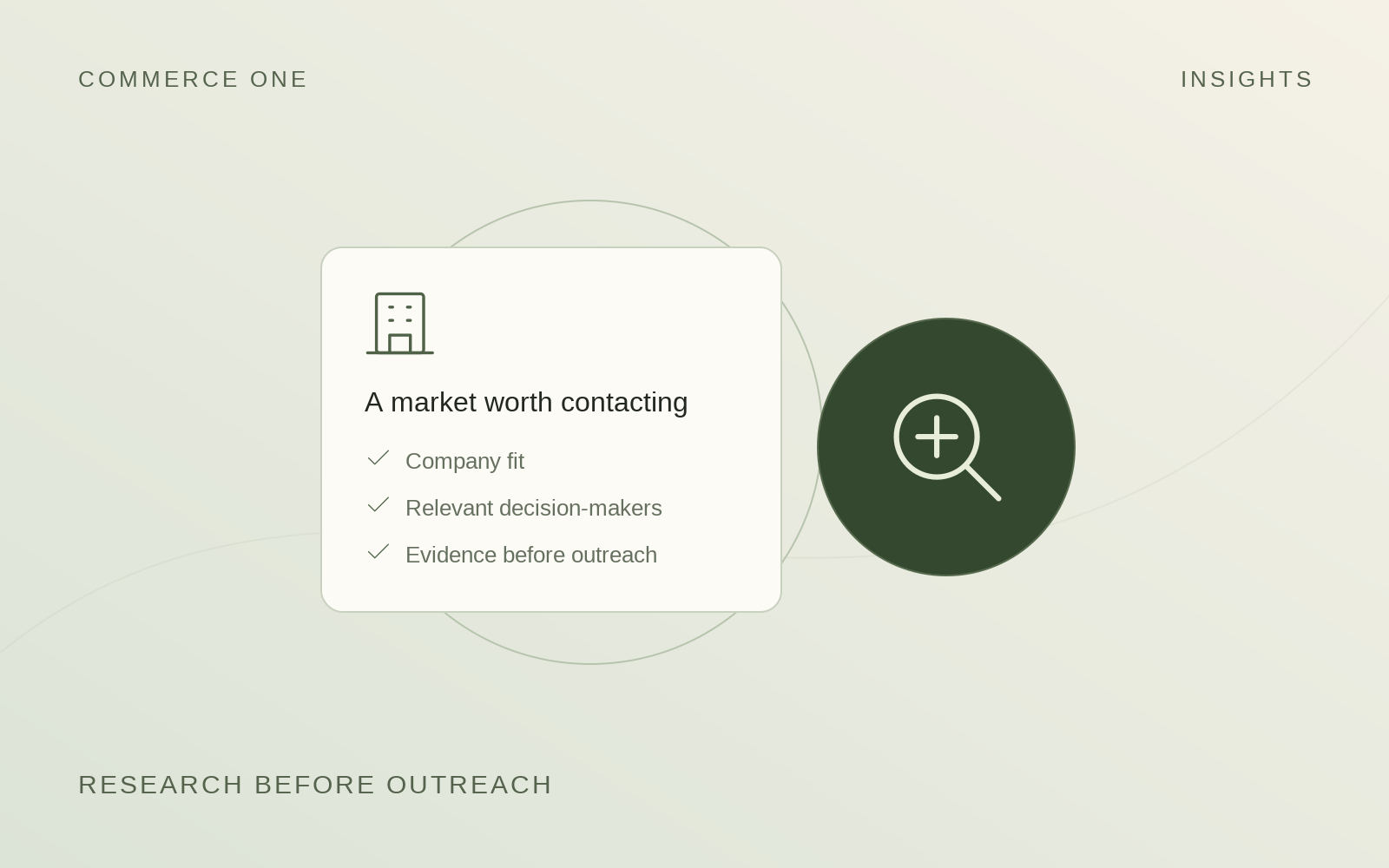
Research establishes which companies appear to fit. Contact discovery identifies people with a relevant responsibility. Messaging explains the commercial reason for the approach. Follow-ups give the conversation an appropriate opportunity to develop.
Initial reply handling then separates interest from questions, referrals, objections and requests to stop. Qualification establishes whether a response merits the client’s attention. A useful handover is an email introduction with a clear written summary, a named owner and an agreed next step.
The value of this process is that each step informs the next. If replies reveal that a different role owns the decision, the research can change. If a market cannot meet your minimum order, the audience can narrow.
When it is a good fit
Outbound is worth considering when you have:
- An established offering that can be explained accurately.
- An identifiable business audience with a plausible need.
- Commercial economics that can support active customer acquisition.
- Capacity to fulfil additional business.
- Someone who can take ownership after a qualified handover.
An illustrative example is an equipment supplier with a capable technical sales team but limited time for systematic prospecting. The supplier can assess applications and prepare quotations once there is a credible conversation. Outbound can support the work required to reach that point.
What to resolve before launch
A Program needs a credible promise, evidence to support it and a workable response process.
If availability is uncertain, agree what can be said. If a product requires specialist assessment, identify who will answer technical questions. If the sales team is at capacity, decide how new conversations will be handled before expanding outreach.
Larger prospect coverage does not guarantee more suitable buyers or a fixed number of meetings. The available market, proposition, timing and response all affect results. Scope should be agreed around those realities.
If you also need Commerce One to help develop opportunities, coordinate commercial next steps and progress a defined buy-side or sell-side objective, a commercial mandate may be more appropriate.